















UN warns of likely El Niño before Sept and devastating weather extremes
text_fields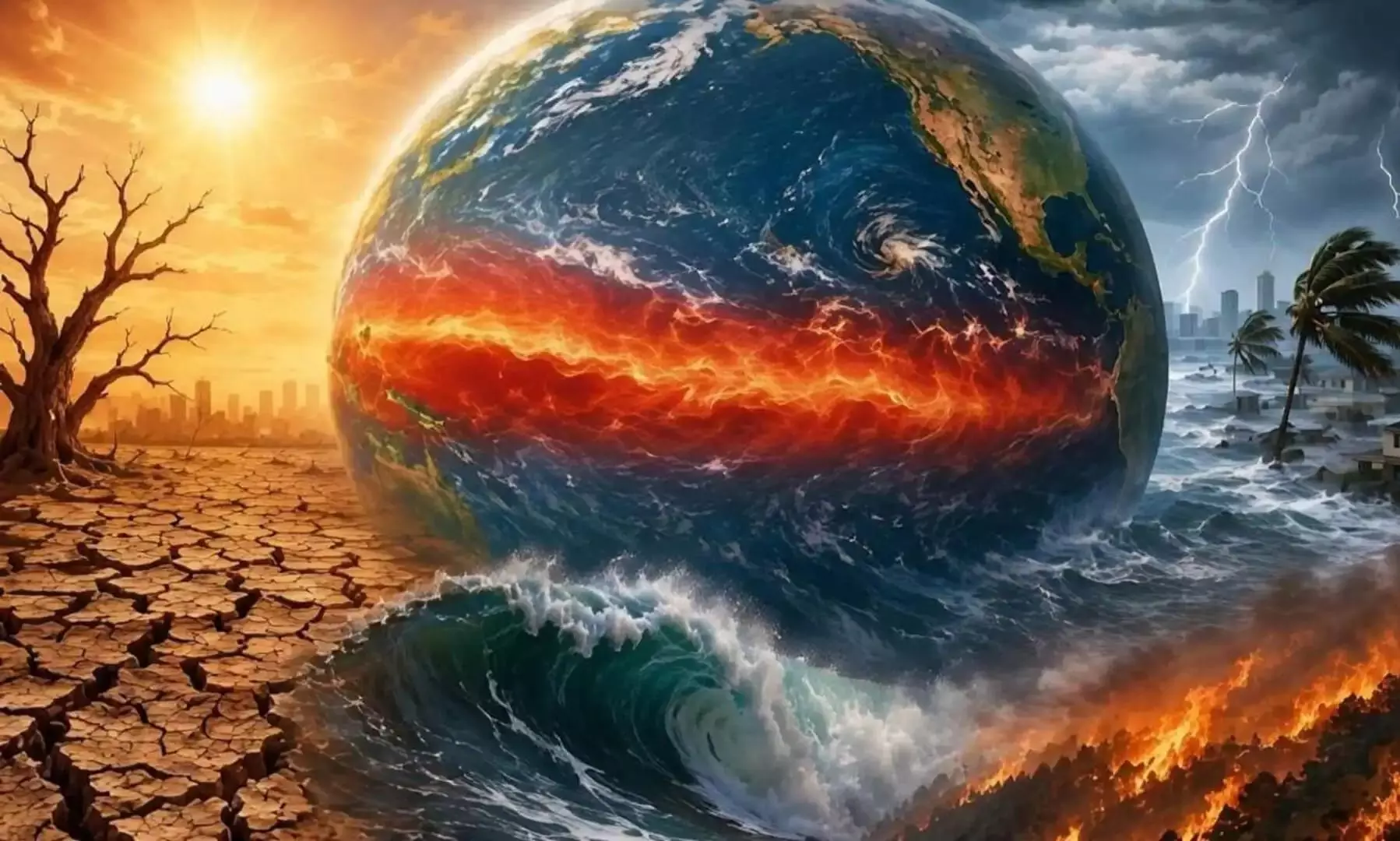

The world must brace for a renewed spell of climatic upheaval as the World Meteorological Organization (WMO) predicts an 80 per cent chance of El Niño forming before September and a 90 per cent chance before November, with the UN warning of the powerful return of the supercharged weather extremes it brings, including rising global temperatures and worsening rainfall in some regions.
The WMO on Tuesday said that most forecasting models pointed towards the re-emergence of the cyclical ocean-atmosphere phenomenon at a strength that would be at least moderate and potentially severe, while uncertainty remained over whether it could evolve into one of the most powerful El Niño episodes witnessed this century.
Warning that the phenomenon would amplify the effects of human-induced climate change, UN Secretary-General António Guterres described the looming development as an urgent climate alarm, and he said El Niño would add further momentum to an already warming planet while extending the reach and severity of extreme weather events across national borders.
The last El Niño event, which unfolded during 2023 and 2024, ranked among the five strongest ever recorded, and it contributed significantly to the unprecedented global temperatures registered in 2024, which became one of the hottest years in modern observational history.
Meteorologists have forecast unusually high temperatures across almost every region of the world over the coming three months, and the WMO has cautioned that the likelihood of devastating droughts and intense rainfall events will increase as ocean temperatures continue to climb.
Although each El Niño episode manifests differently, scientists generally associate the phenomenon with heavier rainfall across parts of South America, the southern United States, the Horn of Africa and Central Asia, while drier conditions often emerge in Central America, northern South America, the Caribbean, Australia, Indonesia and sections of South Asia.
The expected return of El Niño has also heightened concerns over global food security, and climate analysts warn that agricultural systems already strained by rising temperatures, erratic weather and disruptions to fertiliser supplies could face fresh challenges in the years ahead.
The WMO noted that sea-surface temperatures in key regions of the Pacific Ocean were nearing El Niño thresholds by late April and mid-May, while unusually warm subsurface waters and favourable atmospheric conditions were further supporting its development.