

















Moon’s craters may hold vast platinum reserves, study finds
text_fields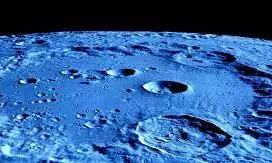

The Moon may contain large amounts of valuable minerals, including platinum, according to a new scientific study.
Researchers say that thousands of lunar impact craters could hold platinum-group metals such as platinum, palladium, and rhodium. These minerals are believed to have come from asteroids that collided with the Moon over billions of years.
The study, led by independent astronomer Jayanth Chennamangalam, estimates that as many as 6,500 craters on the Moon could contain these rare metals. In addition, around 3,400 craters may hold water trapped in hydrated minerals, a resource vital for future space missions.
"These values are one to two orders of magnitude larger than the number of ore-bearing near-Earth asteroids estimated by Elvis (2014)," the researchers wrote. "Implying that it may be more advantageous, and hence more profitable, to mine asteroids that have impacted the Moon rather than the ones that are in orbit."
Scientists believe this discovery could make the Moon a key target for resource mining. Unlike distant asteroids, the Moon is closer, has a stable orbit, and is easier to access.
Asteroid impacts often vaporise material on impact, but studies show that some fragments survive and settle in the center of craters. This means that precious metals and water may still be present in large amounts.
The findings highlight the potential of lunar mining at a time when Earth’s natural resources are under strain. Platinum-group metals are rare but critical for industries and medicine. Water on the Moon could also support human exploration and reduce the need for costly resupply missions from Earth.
Researchers say that mining the Moon might be a more practical and profitable alternative to long-distance asteroid missions. By offering both accessibility and resource abundance, the Moon could play a vital role in the future of space exploration and industry.