

















When will the 'system' be fixed?
text_fields

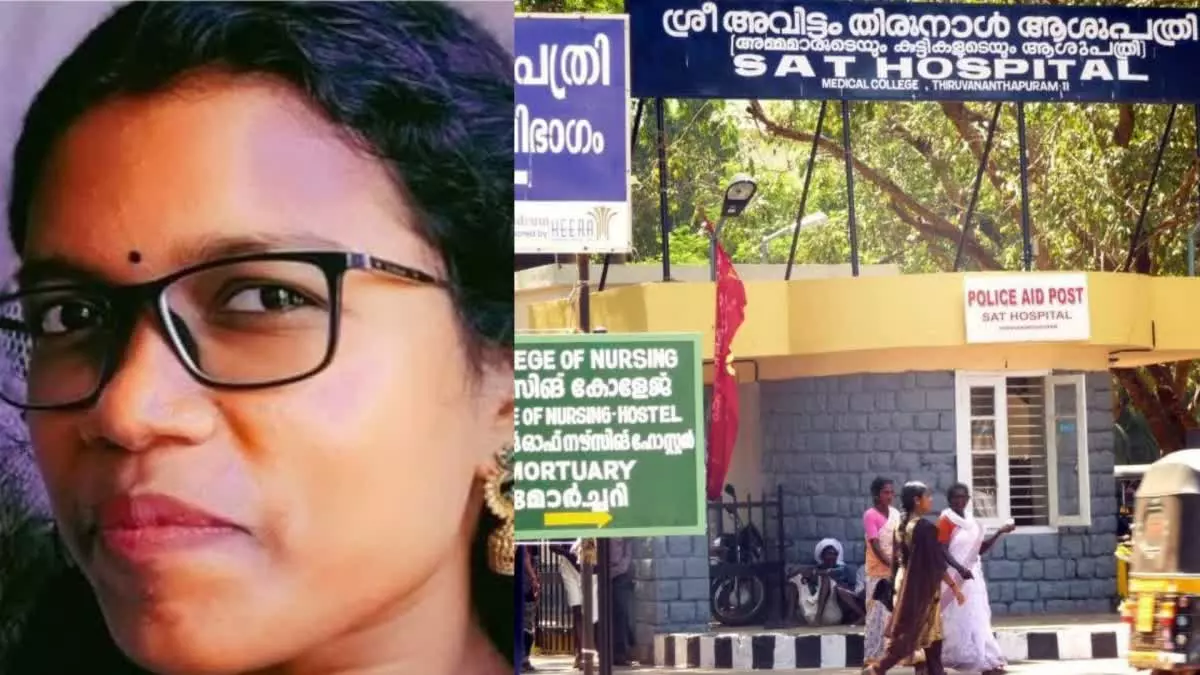
In Kerala, yet another life has been lost due to the fault in the health sector. Relatives claim that negligence at the hospital, followed by an infection after childbirth, led to the death. In response to protests by family members at the hospital, the government, as usual, has ordered an inquiry by an expert committee. A special team has been tasked with conducting the investigation and submitting a report within two days. Recent data show that lapses in the health sector have been occurring regularly, day after day. Each incident seems to confirm the health minister’s own admission that the system is in a state of collapse. The stark reality remains that these failures continue to mount with no effective remedy in sight.
The woman, who had left the hospital after childbirth, developed a fever three days later and was admitted to a government hospital in Thiruvananthapuram. Upon arrival, she lost consciousness and was immediately shifted to the ICU. Relatives say that hospital authorities informed them that the suture had loosened and an infection had developed. Blood tests showed a low count, and she was diagnosed with dengue fever and referred to the medical college. Her condition worsened daily, and she passed away the other day. Doctors suggested that the stitch had loosened further and that a possible infection from home could have contributed to it. Meanwhile, relatives have raised another serious concern. Investigations have revealed that the infection was caused by bacteria potentially transmitted through the use of contaminated blades and gloves. Senior doctors, including those at the medical college, have openly admitted that even essential surgical supplies are often unavailable. The fact that such materials are sometimes reused, if true, would further worsen the situation.
Days before the young woman’s death, a patient admitted to the government medical college hospital for cardiac treatment for five days died without receiving care. Before the death occurred, the patient had sent a voice message to a close friend. The message detailed the hospital's woes and hardships, as well as the staff's attitude. Despite being admitted for an emergency angiogram, the patient did not receive treatment even after six days. At the health facility which the ordinary citizens rely on, what the patient faced was severe neglect. The government had also announced an expert committee inquiry into this matter whose report was submitted the other day. As usual, the report stated that the patient had received the required treatment and that no lapses had occurred. The report was prepared without hearing the family. Over the past five years, numerous similar incidents and investigations have taken place. In none of these cases was any meaningful investigation or action taken. Even when some punitive measures were imposed, as in the ICU abuse case in Kozhikode, they were soon withdrawn and things made smooth for the suspects, inline with usual practice. As a result, protection is guaranteed regardless of what happens. This is also the main reason for the staff's cavalier attitude.
Lapses occurring one after another are delivering a severe blow to Kerala’s ‘Number One in Healthcare’ image. The accidental death at Kottayam Medical College, the amputation of a nine-year-old girl’s hand after an injury, revelations about the lack of medical equipment, the loss of both leg and livelihood of a young man from Wayanad due to doctors’ negligence at the medical college, recurrence and relapse of diseases, and the challenge of existing and spreading amoebic encephalitis are among the major challenges facing the health sector. Amoebic encephalitis is a new, significant challenge, and several people have already died from it. This is not to lose sight of Kerala's leading position in parameters of life expectancy, infant and maternal mortality rates, and low-cost treatment. Even when compared with other states or global averages, our state ranks much higher in the areas mentioned above. The state governments have played a major role in achieving such accomplishments. To maintain these achievements and move towards new ones, it is necessary to develop the system that the minister himself refers to. Immediate attention is required. The current practice of treating 1,000 patients with a system designed for 100 must be changed and developed into one that provides quality care for all. Otherwise, a heavy price will have to be paid.
