









Trump-Modi trade agreement
text_fields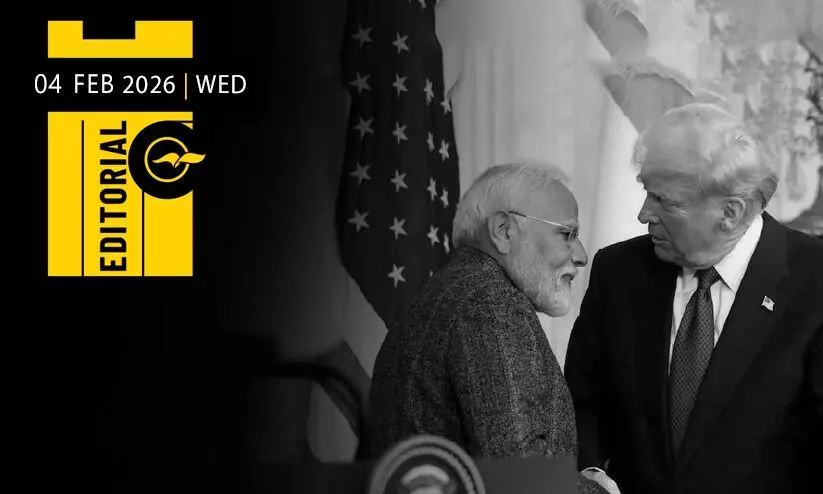

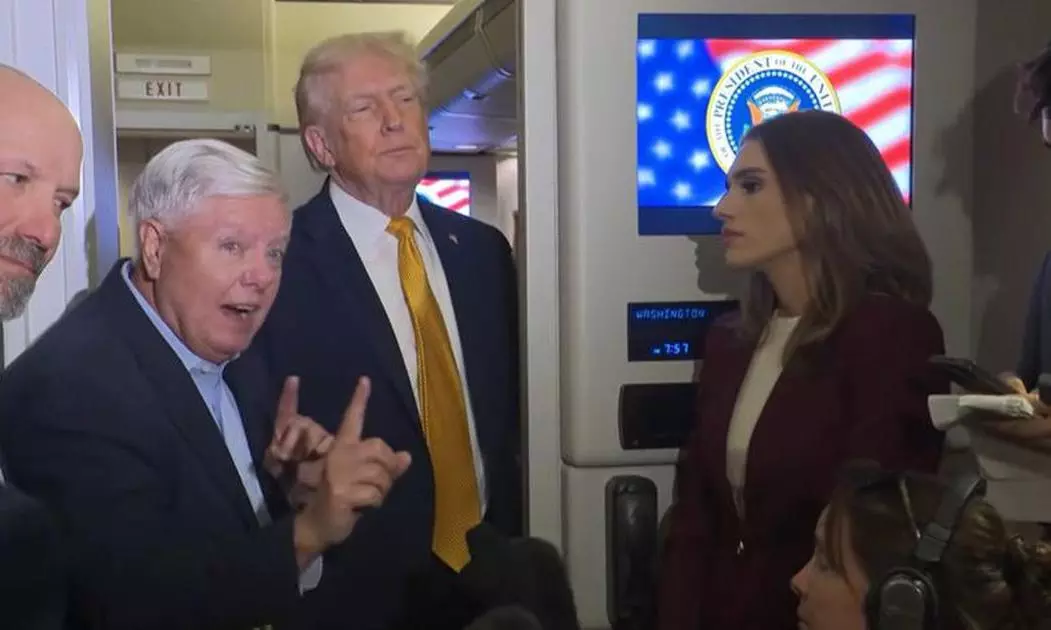
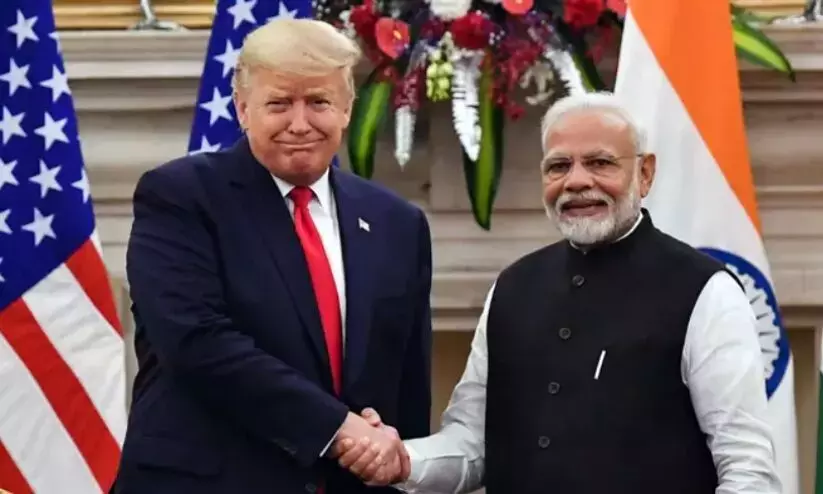
U.S. President Donald Trump has announced that a trade agreement has finally been reached with India. According to the announcement, the United States has decided to reduce tariffs on Indian products from 25% to 18%. While Prime Minister Narendra Modi did not explicitly confirm the finalisation of the trade deal, he expressed his gratitude to the American President for reducing the tariffs to 18%, effectively indicating his acceptance of Trump’s declaration. That is to say since Modi stated that he was thanking Trump on behalf of India’s 1.4 billion people for this “wonderful announcement,” no further confirmation of the agreement appears necessary. The Prime Minister emphasised that when two of the world’s largest economies and democracies work together, it benefits their people and opens up vast possibilities for mutual cooperation. By further stating that Trump’s leadership is crucial for global peace, stability, and prosperity, Modi signalled a clear move towards a more unified approach to global issues, with even greater strength than before. Previously, there was a general sense of optimism in the country that India’s trade agreement with the European Union would pave the way for a major boost in both the export of Indian products and the import of European goods.
Under the current trade agreement with the United States, a greater stimulus than ever before is expected in the import-export sector. However, it remains to be seen how much relief this will actually bring to the vast majority of the Indian population, including the common man, the middle class, and the poor. This is because it has been pointed out that the concessions in the trade agreement with the European Union primarily benefit consumers of products such as high-end luxury cars. The extent to which the significant reduction in duties on Indian goods exported to America will benefit fishermen, ordinary farmers, and small-scale industrial producers depends on how far the economy remains free from exploitation. While the Prime Minister and the country’s rulers repeatedly claim that India is the world’s third or fourth largest economic power, millions of the marginalised in this vast country remain destined to drink their gruel from their own palms. This is because governments that accord primary importance to economic decentralisation and the social justice mandated by the Constitution continue to remain a distant dream.
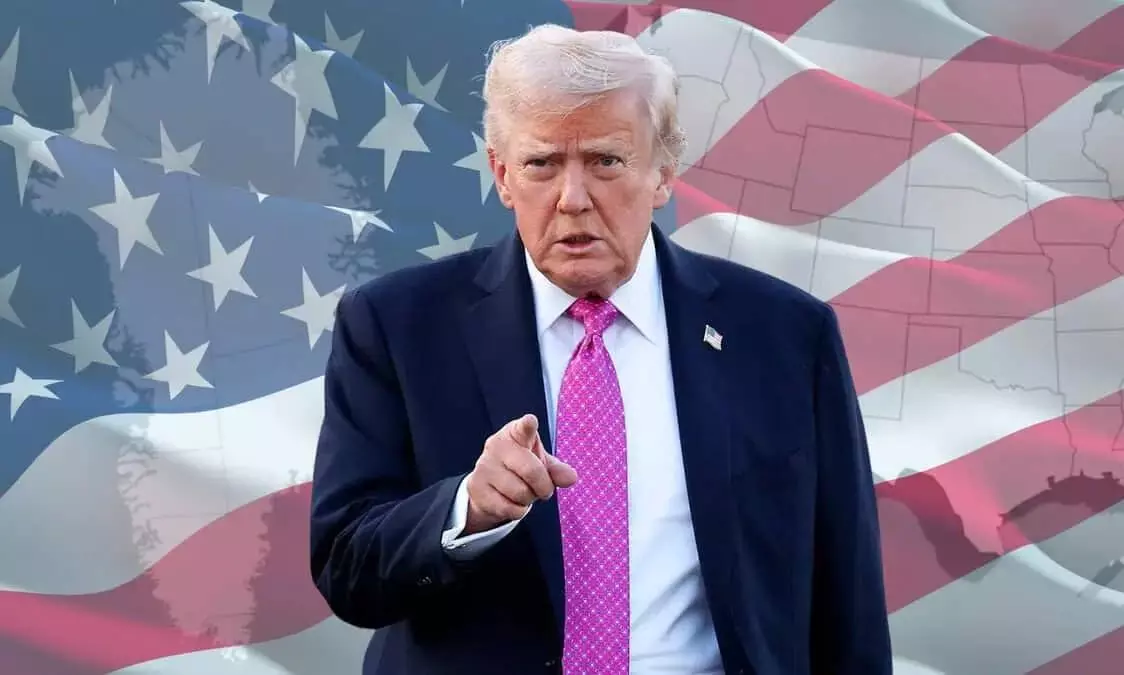
At the same time, when Narendra Modi praises Donald Trump’s leadership as vital to world peace, stability, and prosperity, one cannot help but wonder how far removed this is from reality. Trump has embraced Pakistan—which India views as a constant threat to its peaceful existence—without even a word of reprimand, even making it a member of committees for the reconstruction and reorganisation of Gaza. Addressing the most recent meeting of Arab Foreign Ministers, External Affairs Minister S. Jaishankar made it clear that India stands firm on the position that a two-state solution is the only way forward for the Palestine issue. On this, however, it is widely known that Trump stands with Israeli Prime Minister Benjamin Netanyahu, who completely rejects that proposal. As such what contribution to world peace can realistically be expected from Trump? While much of Europe has implemented sanctions against Russian oil, India has maintained close ties with Russia, strengthening that relationship through oil imports. Now, through the tariff agreement, Trump’s stringent policy condition is that India must import oil from Venezuela instead of Russia. By yielding to this, will India–Russia relations be strengthened or weakened? Furthermore, while many countries are tightening economic sanctions against Iran, India’s policy has been to maintain its long-standing friendship with the country. Donald Trump, however, appears to be on a path to dismantle Iran in alliance with Israel. Is this supposed to aid world peace and stability? If diplomacy is reduced to mere hypocrisy and window-dressing, then such double standards can indeed be justified.