











The judiciary disappoints once again
text_fields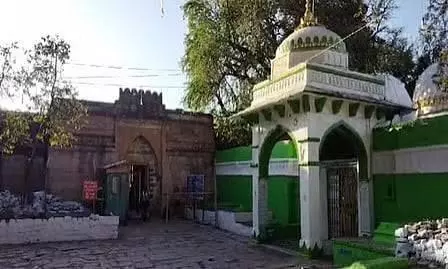

The Madhya Pradesh High Court delivered a verdict on May 15, banning Friday prayers by Muslims at the Kamal Maula Mosque located in Dhar, Madhya Pradesh. And on Tuesday the Supreme Court dismissed an appeal filed by a few Muslims seeking a stay on that verdict, whereby the situation of Muslims being barred from offering Friday prayers inside the mosque will continue. A three-member bench, headed by the Chief Justice, directed the state government to facilitate Friday Jumu'ah prayers in an open space near the mosque from 1:00 pm to 3:00 pm, and to ensure that no one is allowed to create trouble. The High Court had ruled that the character of the said worship complex was that of a Hindu temple, and that it was once a Saraswati temple. It was the same High Court verdict that invalidated the 2003 settlement arrangement, which had allowed Muslims to pray on Fridays and Hindus on Tuesdays in accordance with the decision of the Archaeological Survey of India (ASI). Namaz had been held for centuries in this mosque, which was named after the Sufi saint Kamaluddin Chishti, whose tomb also is at the same location, since the 13th century. This arrangement included the five daily prayers until the intervention of the Archaeological Department and subsequent court rulings. It was after a survey conducted by the ASI in 2003 that the five daily prayers were discontinued, and the arrangement of prayers on Fridays and Tuesdays for the two communities came into effect. The High Court banned even that arrangement on a petition filed by a till then unknown Hindu organisation. The Supreme Court's ruling on Tuesday came on the appeal filed by Muslim petitioners against the High Court verdict.
Also read: Pleas against demolition of mosques rejected by Rajasthan HC
The Muslim side argued in the Supreme Court that, according to the Places of Worship Act of 1991, the status quo of places of worship as on August 15, 1947 must not be altered. They pleaded in vain that the Ram Temple in Ayodhya was a sole exception to that status and that similar claims should not be raised over any other place of worship. When the Hindutva leadership was asserting claims over various mosques during the highly sensitive Babri Masjid dispute, this very law was enacted to prevent conflicts by prohibiting such disputes all over, except Babri. Section three of the Act prohibits the conversion of a place of worship of one section into that of another. Section four, on the other hand, determines that any legal proceeding pending in courts regarding the status of any place of worship as it existed on August 15, 1947, shall stand abated. Any legislation contrary to this will also be invalid. What is difficult to understand is that despite all this, what circumstances arose to justify such a major change to the existing status quo. The question raised by Advocate Meenakshi Arora, appearing on behalf of the petitioners — 'If prayers could be held for 800 years, and if worship for both communities could be facilitated under the 1995 compromise, why can this not continue thereafter?' — stands not only before the judiciary but also directly stares at India's multi-religious identity.
Also read: UP demolishes 'illegal' Eidgah built on graveyard land in Sambhal
In the case of the Maula Mosque in Madhya Pradesh, the Sangh Parivar has adopted exactly the same routine of raising claims over mosques in the country by conjuring up various myths and historical controversies. The BJP/Sangh Parivar camp, which used to try to play the good guy by asking what problems the minorities in the country faced and pointing to the statistics of communal riots during the Congress era, is now openly taking a communal stance. RSS chief Mohan Bhagwat himself had advised that there was no need to look closely into every mosque in the country to see if there were remnants of Hindu symbols. But what happened thence? Moving past the Gyanvapi Mosque in Varanasi and the Shahi Eidgah Mosque in Mathura, over which the RSS had laid claims after Ayodhya, the Sangh Parivar is continuing to claim countless mosques, from the Shahi Jama Mosque in Sambhal, Uttar Pradesh, to the Jamia Mosque in Srirangapatna, Karnataka. In addition to this, there are mosques being demolished with bulldozers under accusations of land encroachment and illegal construction. None of the actions taken by the judiciary regarding these acts touch upon the core of the issue or hand down exemplary punishment to the culprits. In the Gyanvapi case, it was the Supreme Court itself that permitted a survey by the ASI to check if there was a Shivling under the mosque's ablution pool and ruled that a survey alone would not go against the Places of Worship Act of 1991. It was this interpretation that paved the way for several subsequent claims and surveys for remnants of Hindu shrines. If the very law enacted to ensure a peaceful social atmosphere is rendered a mere bystander, then what hope can citizens hold to approach the courts for justice?
Also read: Bajrang Dal targets Muslim family over prayers at private home
When the courts withdraw from taking strong stances through subjective or stretched interpretations, and instead yield to the interests of the bellicose faction under the pretext that it is an emotional issue requiring careful handling, one is forced to say that the judiciary has let us down once again.