











Erdogan's crackdown on dissent overshadows NATO summit
text_fields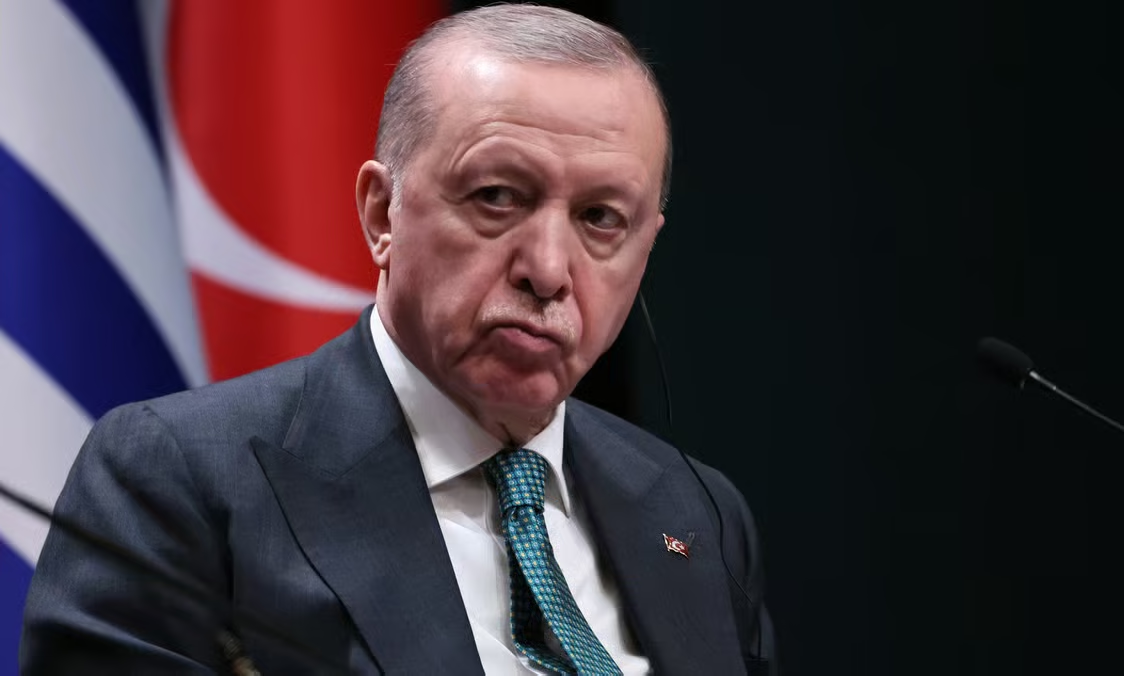

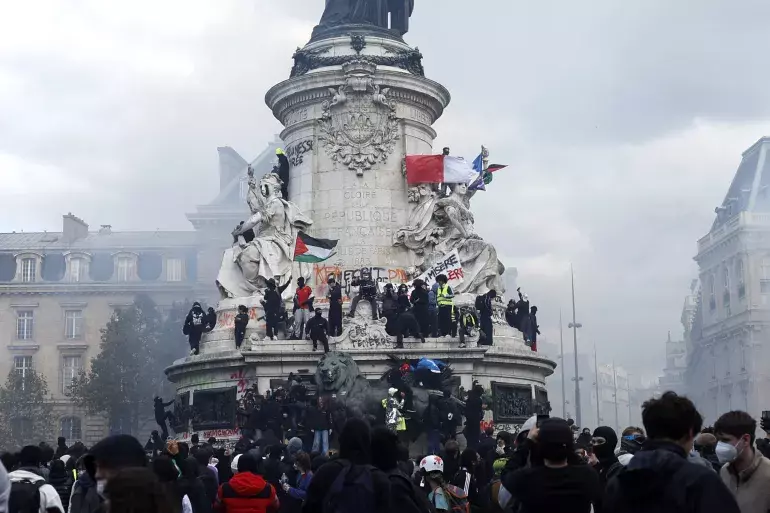
President Recep Tayyip Erdogan ordered a major crackdown on dissent in Turkey. Over 200 people were arrested, including journalists, lawyers, ecological activists, and stand-up comedians. The police explained the arrests as part of a counterterrorism operation, despite there being no suggestion that any of the suspects were involved in violence of any kind.
Prior to the summit, the government announced that demonstrations would not be permitted in Ankara until 10 July. This is evidence of growing government hostility to dissent. There are ever more severe limitations on free expression and stricter and stricter regulation of opposition groups. The media is subject to great scrutiny, and one wrong word can lead to prison. Turkey is now ranked 163rd out of 180 countries for press freedom. In the 1990s, it was ranked above 100th.
The People's Republican Party (CHP) is the main opposition party. It recently won the mayoralty of Istanbul with a candidate named Ekrem İmamoğlu. This worries Erdoğan and his Justice and Development Party (AK Party). Erdoğan used to be the mayor of Istanbul in the 1990s.
Ekrem İmamoğlu is on trial on what his supporters say are blatantly trumped-up charges of bribery. The CHP says this is an attempt to divert attention from endemic AK Party corruption, giving confidential information to foreign governments, insulting officials, and accusing Erdoğan of being the king of corruption.
İmamoğlu has been charged with 140 crimes and faces a maximum sentence of 2,300 years. Dozens of CHP local councillors have been arrested and charged. The CHP calls it lawfare. They say the judiciary has been packed with Erdoğan's yes-men. The CHP says that the AK Party has used large-scale cheating to win elections. In the last presidential election, Erdoğan beat the CHP candidate by his narrowest margin yet.
Erdoğan has been in office since 2002, first as Prime Minister and later as President. Whatever people thought of his conservatism and his authoritarian tendencies, for years, no one could dispute the economic growth he brought. But for the past five years, there has been stagnation and inflation. Erdoğan has had to use more stick because there is less carrot to offer.
Insulting the President is a crime, as is offending religious beliefs. In practice, it is only Islam that is protected by law, despite Turkey being officially secular.
The North Atlantic Treaty Organisation is supposedly committed to democracy. It has had countries as members even when they were open dictatorships, such as Turkey in the 1960s, Greece from 1967 to 1974, Spain until 1975, and Portugal until 1974.
Western criticism of Erdoğan has been muted. This is because Turkey has the second-largest military in NATO. The United States is half out of NATO already, it seems. NATO dares not alienate Turkey. The Turks' location, bordering Georgia, Armenia, Azerbaijan, Iran, and Syria, is strategically vital. The Turkish Black Sea coast, Turkish control of the Bosporus, and the Eastern Mediterranean would be crucial in a war against Russia. There are some politicians in Western capitals who denounce Erdoğan as a dictator and express solidarity with his victims.
In the run-up to the NATO Summit in Ankara, Turkey's capital was spruced up. The summit showcases the country's importance and might. This is just the message that President Erdoğan likes to project: he is a world leader. President Trump is coming to town, as is President Zelensky, despite Ukraine not being a NATO member. Almost all 32 NATO countries have their leaders flying to Ankara. The ban on demonstrations is, the government says, for security reasons.
It is likely to be a tetchy NATO Summit. Trump notes that the US has spent 6% of GDP on defence for decades. All NATO countries were supposed to spend at least 2% of GDP on defence, but until 2022, very few did. The United Kingdom is at 2.5% and aspires to reach 3.5% by 2030.
Countries neighbouring Russia include Poland, Latvia, Lithuania, and Estonia. They have horrific memories of brutal Russian occupations in the past century, and they are already spending over 5% of GDP on defence. The further a country is from Russia, the less it tends to spend. Spain spends just 1% of GDP on defence.
There are NATO leaders who say that GDP misses the point. Tying defence spending to GDP means a country would spend less on defence even if the threat grew, so long as the economy was shrinking. There are those who say that a country must decide what it needs to spend and then spend it, regardless of whether the economy grows or contracts.
President Trump is threatening to withdraw 80,000 US troops from Europe and redeploy them to Asia. Some NATO governments, such as Poland, are worried that Russia may attack a NATO country as a way of breaking NATO's resolve to support Ukraine.
They fear a false-flag operation: Russia will launch a missile at itself and say that it was fired by a NATO country, and this will be a casus belli for Russia to retaliate. Moscow believes NATO countries are callow and divided. It expects them to dither. This will end NATO solidarity. Then some NATO countries will cave in to Russian demands and end aid to Ukraine.
Turkey was able to act as an honest broker between Iran and the United States during the recent conflict, though Pakistan was the venue for the talks. Turkey has a very fraternal relationship with Iran. The Turkish Government has better links with Tehran than almost any other Middle Eastern government. Iranian dissidents resident in Turkey have sometimes been handed over to the Iranian police by their Turkish counterparts without any extradition process.
President Erdoğan has maintained cordial relations with Russia throughout the Ukraine War. The chemistry with Putin is good: two strongmen without any regard for democratic niceties or human rights. Alone among NATO countries, Turkey has not imposed any sanctions on Russia. Turkey is the biggest tourist destination for Russians, who may enter without a visa. The Ukraine War has been an economic boon for Turkey. The Turkish economy desperately needs Russian tourists and Russian export markets. Some NATO countries have repeatedly accused Turkey of knowingly helping Russia evade sanctions. A Turkish company will buy a sanctioned item from a Western country and sell it on to a Russian company for a percentage markup. It is very easy money for the Turks.
Disclaimer: The views and opinions expressed in this article are solely those of the author and do not necessarily reflect the views, policies, or positions of any organisation, institution, employer, or publisher. The article is intended as the author's personal analysis and commentary based on publicly available information.