









Right to protest under threat across Western democracies, says new report
text_fields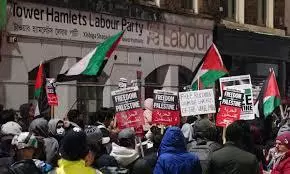

A new report by the International Federation for Human Rights (FIDH) has warned that the right to protest is facing sustained attacks across Western democracies, particularly in the UK, the US, France, and Germany.
The report accuses these governments of using counter-terrorism and anti-antisemitism measures to criminalise pro-Palestinian demonstrations and suppress dissent.
According to the study, which draws on open-source data, witness testimonies, and international reports, authorities in these countries have “weaponised” legal frameworks meant to combat terrorism and hate speech to stifle political expression and public solidarity with Palestinians in Gaza and the occupied West Bank.
Yosra Frawes, head of FIDH’s Maghreb and Middle East desk, noted that this trend marks a concerning shift toward the normalisation of exceptional state powers in handling dissent.
The findings come shortly after a US-backed ceasefire deal brought a temporary halt to the conflict in Gaza, alongside the release of Israeli hostages and thousands of Palestinian prisoners. Covering the period between October 2023 and September 2025, the report also raises alarm over increasing censorship of public officials, threats to journalists, and the erosion of academic and civil freedoms in the four countries.
In the UK, the report criticises successive governments for intensifying restrictions on protest rights. It points to the Conservative government’s 2024 anti-protest law - later ruled unlawful - and says that the Labour government, which came to power in July 2024, has done little to reverse these measures.
The report alleges that Labour’s policies have continued to legitimise Israel’s military actions and frame criticism of Israel as antisemitic, disproportionately targeting Muslims and other racialised groups.
The FIDH report also references statements by former home secretary Suella Braverman, who described pro-Palestine demonstrations as “hate marches.” The study argues that such rhetoric has contributed to the stigmatisation of Palestinian advocacy and the broader Muslim community in the UK.
Official figures show a troubling rise in hate crimes, with Islamophobic assaults increasing by 73% in 2024 and overall hate crimes against Muslims rising by nearly 20% this year. Antisemitic incidents have also spiked, contributing to growing insecurity within Jewish communities. Earlier this month, two Jewish worshippers were killed in an Islamist-inspired attack at a Manchester synagogue.
As mass protests against Israel’s actions in Gaza continue, the Labour government has responded by proscribing the activist group Palestine Action and proposing broader police powers to regulate protests. While officials have condemned anti-Muslim hate crimes, community leaders have criticised what they describe as an inadequate response.
Prime Minister Keir Starmer’s recent call to cancel “un-British” demonstrations on the second anniversary of the 7 October attacks has drawn further backlash. Protest organisers accused the government of conflating criticism of Israel with hostility toward Jewish people, while civil liberties groups expressed fears of increasing restrictions on free expression.
The FIDH report situates developments in the UK within a broader global pattern.
In the US, pro-Palestinian activists have faced arrests, legal threats, and institutional backlash.
In France, the government has banned demonstrations in certain cities and dissolved Urgence Palestine, a human rights collective supporting Palestinians.
Meanwhile, in Germany, police have been accused of using excessive force during rallies and of banning certain slogans under laws defining them as antisemitic - a move widely contested by civil rights advocates.
To address these concerns, the report urges the UK to establish an independent oversight body for policing protests and to amend the Terrorism Act 2000 to ensure political opinions and solidarity slogans are not criminalised. It also recommends repealing section 11 of the Public Order Act 2023, which allows suspicionless stop-and-search operations during demonstrations.
The FIDH concludes that the suppression of pro-Palestinian activism reflects not only a human rights crisis in the occupied territories but also a growing erosion of democratic freedoms within the very societies that claim to defend them.