


















International laws fail to limit war’s impact: Israel’s Gaza war as a case study
text_fields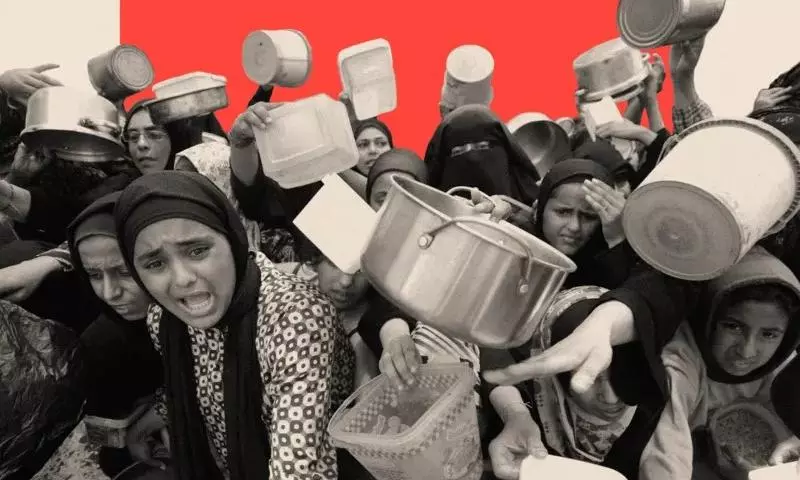

In the wake of Israel’s genocidal attacks on Gaza, growing civilian casualties in Ukraine and an “epidemic” of sexual violence in the Democratic Republic of the Congo, a study found that international laws were incapable of reducing the impacts of war, while torture and rape during conflicts continued without impediment.
An extensive survey of 23 armed conflicts conducted by the Geneva Academy of International Humanitarian Law and Human Rights has concluded that the global legal framework designed to limit the effects of war is at a critical breaking point, as more than 100,000 civilians were killed each year in 2024 and 2025, and grave violations were carried out with near-total impunity, The Guardian reported.
The study, titled War Watch, documents widespread civilian harm, the systematic targeting of non-combatants and a persistent failure by the international community to enforce existing legal safeguards.
According to the research, at least 18,592 children were killed in Gaza by the end of 2025, while the total population of the territory declined by more than 250,000 people, reflecting the scale of destruction caused by sustained airstrikes and ground incursions following the war that began in October 2023.
Although a ceasefire was agreed in October 2025, the report notes that hundreds of Palestinians were killed in subsequent fighting, underscoring the fragility of efforts to protect civilians even after formal hostilities subside.
In Ukraine, the study records a sharp rise in civilian deaths, with 2,514 civilians killed in 2025 alone, a figure that represents a 70% increase compared with 2023, while Russian drone attacks and long-range strikes deliberately targeted civilian infrastructure, leaving millions without electricity and basic services. The report argues that the growing use of drones and imprecise weapons in populated areas has significantly amplified civilian suffering.
Sexual and gender-based violence is documented in almost every conflict examined, with the situation in the Democratic Republic of the Congo described as an epidemic affecting women and girls across all age groups, while similar patterns of brutal abuse were recorded in Sudan following the fall of El Fasher in October 2025. The authors emphasise that such crimes persist because perpetrators rarely face prosecution, despite clear prohibitions under international law.
The study concludes that while the Geneva Conventions legally bind states to respect and ensure respect for international humanitarian law in all circumstances, a widening gap has emerged between treaty obligations and actual conduct during war.
To address this, the authors call for stricter controls on arms sales, bans on the use of inaccurate weapons in civilian areas, tighter regulation of drone warfare and sustained political and financial support for international and national war crimes prosecutions, warning that continued inaction risks rendering the laws of war meaningless.