


IEA warns April could bring worst global oil disruption in history
text_fields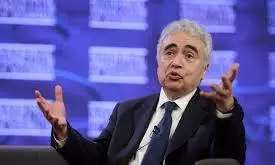

Executive director of the International Energy Agency Fatih Birol warned that the global energy crisis caused by the US-Iran conflict is likely to worsen sharply in April, with oil and gas supply disruptions expected to be far more severe than in March.
Speaking on the "In Good Company" podcast hosted by Nicolai Tangen, Birol said supply losses in April could be twice as large as those already seen.
He explained that some oil cargoes that passed through the Strait of Hormuz before fighting intensified were still reaching ports in March. "In April, there is nothing," he added.
Birol said the current disruption amounts to 12 million barrels per day, more than double the estimated five million barrels per day lost during both the 1973 and 1979 oil crises.
The head of the International Energy Agency said the disruption was affecting not only oil, but also liquefied natural gas, petrochemicals, and fertilisers, raising the risk of wider supply chain problems.
"We are heading towards a major, major disruption, and the biggest in history," Birol said. He warned that the crisis could drive inflation higher, slow economic growth, and force some countries to ration energy.
Birol said shortages of jet fuel and diesel had already emerged, especially in Asia, and could soon spread to Europe.
The IEA is considering another coordinated release of emergency oil reserves after its 32 member countries agreed earlier this month to release a record 400 million barrels.
Birol said further releases could help ease pressure, but would not solve the crisis. "The cure is opening up the Strait of Hormuz," he said.
Oil prices have already surged, with Brent crude rising more than 60 per cent in March, the steepest monthly increase since the 1980s.
US President Donald Trump has signalled a possible de-escalation, saying American forces could leave Iran within "two or three weeks", briefly easing pressure in global markets.