














Savarkar’s nephew says mercy petitions do not diminish VD Savarkar’s ‘Veer’ title
text_fields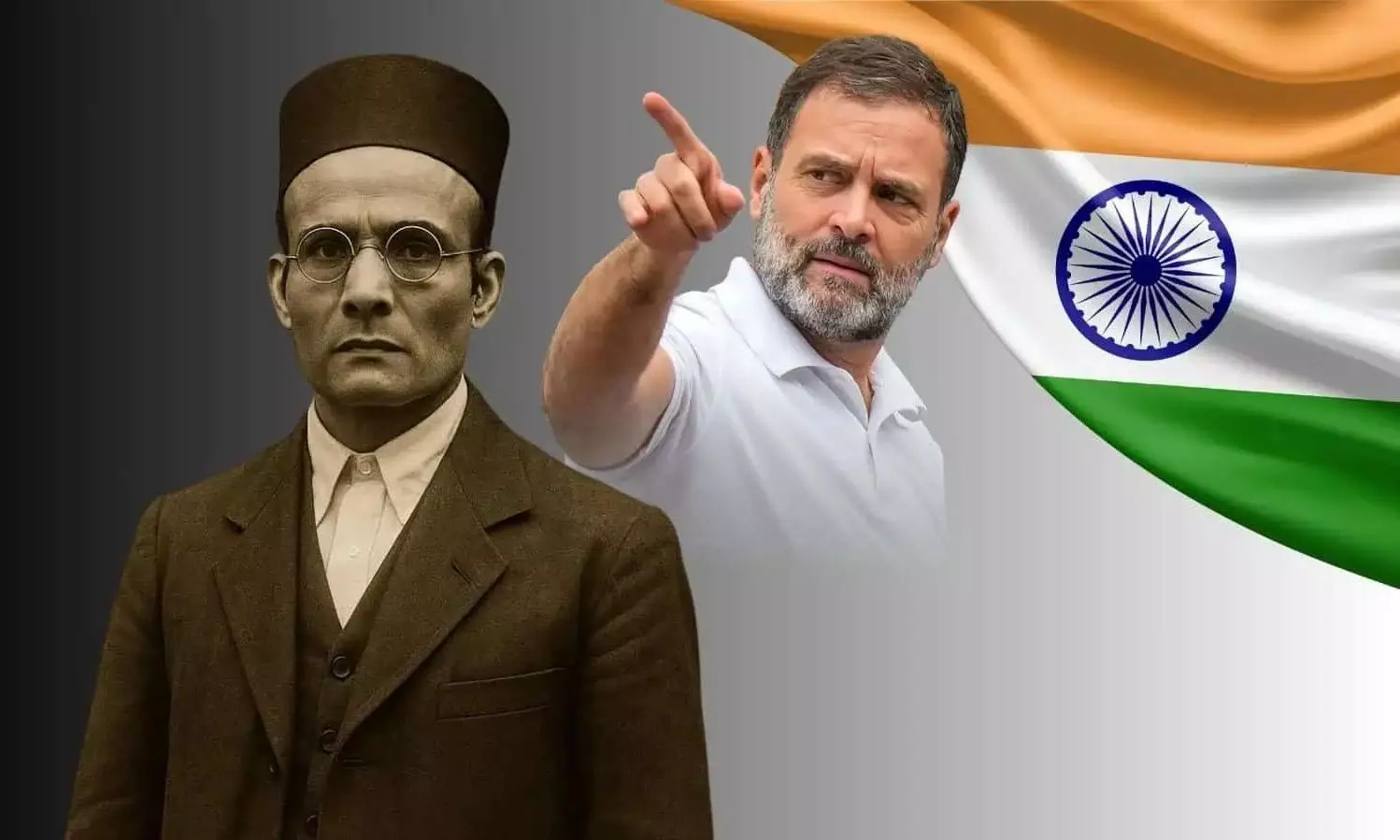

During a case hearing at a Pune court against Congress leader Rahul Gandhi over his alleged statements amounting to the defamation of Hindutva ideologue VD Savarkar, the latter's grandnephew admitted that his uncle had filed ten mercy petitions before the British administration, including one filed within a month of his sentencing seeking early release, while defending the act as neither exceptional nor illegal.
The admission came on Monday during the cross-examination of Satyaki Savarkar before Special Judge Amol Shinde in connection with a complaint filed against Gandhi, who has been accused of making false and malicious statements about VD Savarkar during an event in London in March 2023.
The complaint was instituted by Satyaki Savarkar in April that year, alleging that Gandhi’s remarks amounted to criminal defamation.
During the proceedings, Satyaki Savarkar acknowledged that the Hindutva ideologue had submitted ten clemency petitions to the British authorities and that official records relating to those petitions were available in government archives. He also accepted that one of the petitions had been filed within a month of Savarkar’s sentencing.
However, he rejected the contention that seeking clemency was inconsistent with Savarkar’s title of “Veer”, maintaining that the submission of such petitions formed part of a standard legal procedure under the British administration through which prisoners sought remission or reduction of their sentences.
According to him, the practice was neither exceptional nor unlawful and, therefore, could not by itself diminish Savarkar’s standing.
During the cross-examination, Satyaki Savarkar also acknowledged that several prominent revolutionaries of the freedom movement, including Rajguru, Bhagat Singh, Batukeshwar Dutt and Ashfaqulla Khan, had not filed clemency petitions before the British authorities and had remained steadfast in their ideological convictions until the end.
He further disputed the suggestion that the language employed by Savarkar in his mercy petitions reflected humility or an expression of loyalty towards the British government, contending instead that the wording followed the official procedural format prescribed for such applications and did not contain declarations of allegiance to the colonial administration.
Satyaki Savarkar additionally told the court that the British authorities rejected all the mercy petitions submitted by Savarkar, allegedly because they feared that he would resume revolutionary activities if released. The matter is scheduled to come up for further cross-examination on July 1.