












Hijab case appeal: SC says it will set up a bench soon
text_fields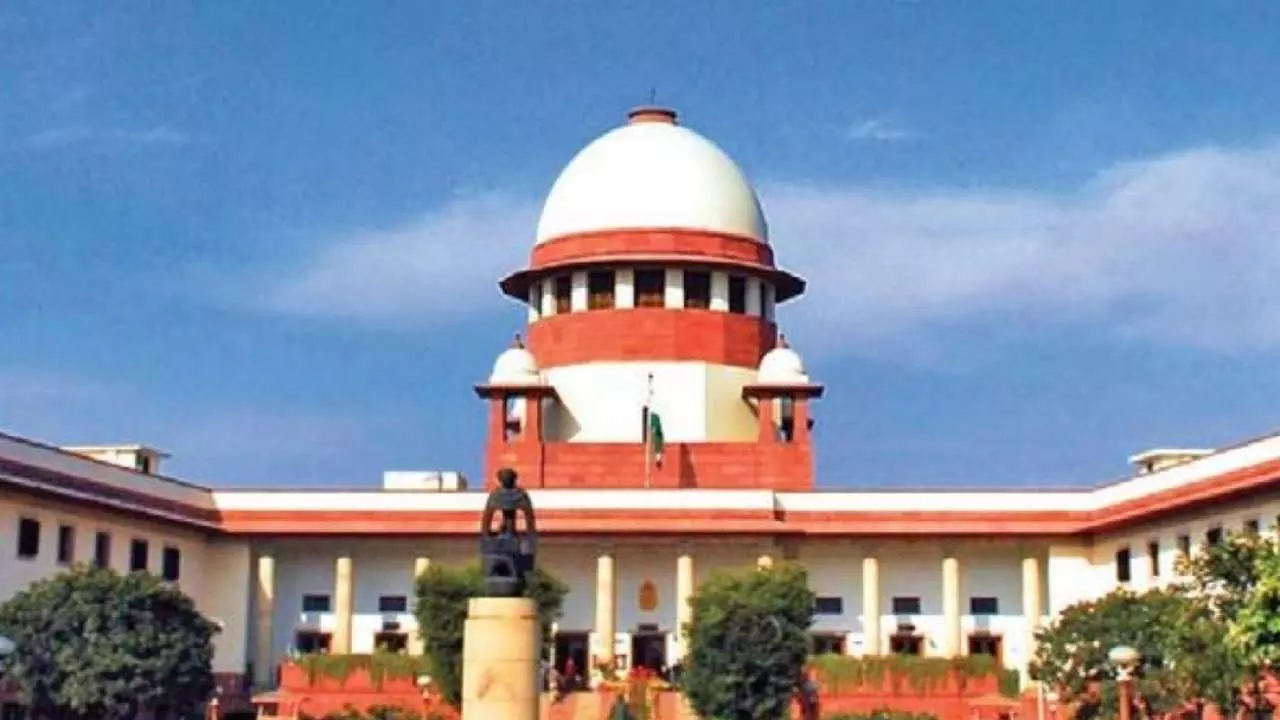

New Delhi: The hijab case, which has been pending before the Supreme Court for a few months in the form of an appeal against a Karnataka High Court verdict, came up for mention in the apex court on Tuesday.
Chief Justice NV Ramana said that the court would set up a bench to hear a batch of pleas challenging the Karnataka High Court verdict, which had refused to disturb the government order banning hijab in educational institutions of the state.
The CJI added that one of the judges was unwell leading to a delay.
A bench comprising Chief Justice N V Ramana and Justices Krishna Murari and Hima Kohli took note of the submissions of senior lawyer Meenakshi Arora, appearing for one of the appellants, that the appeals were filed way back in March against the high court order and they were yet to be listed for hearing.
"I will constitute a bench. One of the judges is not well," the CJI said, adding "Wait. If the judges would have been alright, the matter would have come."
The top court on July 13 had agreed to hear the petitions challenging the Karnataka High Court verdict on the issue.

It was then mentioned by lawyer Prashant Bhushan who said "the girls are losing out on their studies. This matter was filed long back" and highlighted that they have been facing difficulties because of that.
The appeals against the March 15 verdict of the high court, which had dismissed petitions seeking permission to wear hijab inside the classroom, were mentioned for urgent hearing on April 26 as well.
On March 24, the Supreme Court had declined to give any specific date to hear a plea challenging the Karnataka High Court order, which dismissed all petitions seeking direction for permission to wear hijab in classrooms.
Senior advocate Devadutt Kamat mentioned one of the cases on behalf of a petitioner, a Muslim girl student, and sought urgent listing of the matter. He insisted that exams are approaching and urged the court to hold an urgent hearing on the matter.
A bench headed by Chief Justice Ramana, however, said this has nothing to do with exams, and told Kamat not to sensationalise the matter. Kamat contended that the girl students are not being allowed to enter the schools, and they will lose one year. However, the bench did not deal with the matter further that day.
Several petitions filed against the Karnataka High Court verdict are now pending before the apex court. By and large, all of them contest the verdict that wearing of hijab is not a part of the essential religious practice which can be protected under Article 25 of the Constitution.
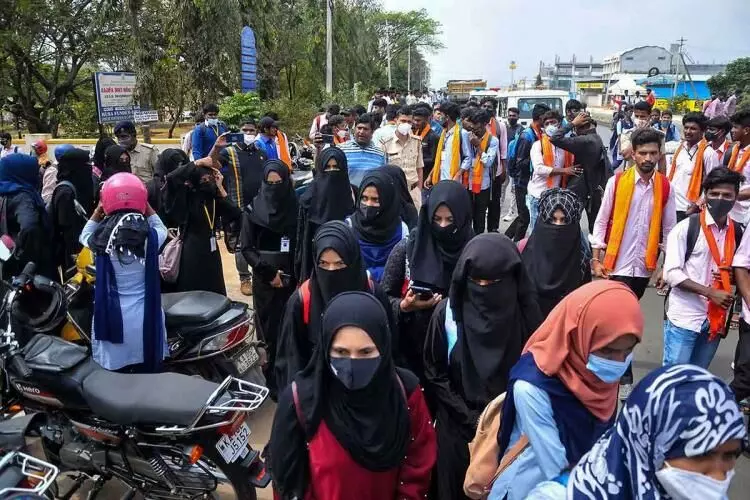
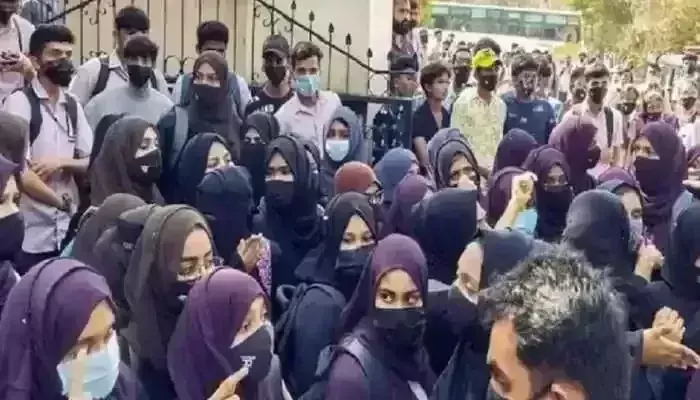
The high court had dismissed the petitions filed by a section of Muslim students from the Government Pre-University Girls College in Udupi, seeking permission to wear hijab inside the classroom.
The prescription of school uniform is only a reasonable restriction, constitutionally permissible which the students cannot object to, the high court had said.
In one of the pleas filed in the top court, the petitioner said the high court has erred in creating a dichotomy of freedom of religion and freedom of conscience wherein the court has inferred that those who follow a religion cannot have the right to conscience.
The high court has failed to note that the right to wear hijab comes under the ambit of the right to privacy under Article 21 of the Constitution of India. It is submitted that the freedom of conscience forms a part of the right to privacy, the petition averred.
The plea said the petitioner had approached the high court seeking redressal for the alleged violation of their fundamental rights against the state government order of February 5, 2022, issued under Sections 7 and 133 of the Karnataka Education Act, 1983.
The high court had maintained that the government was well within its powers to issue the challenged order dated February 5, 2022, and no case is made out for its invalidation.
By the said order, the Karnataka government had banned wearing clothes that disturb equality, integrity, and public order in schools and colleges, which the Muslim girls had challenged in the high court.
Challenging the February 5 order of the government, the petitioners had argued before the high court that wearing the Islamic headscarf was an innocent practice of faith and an essential religious practice and not a mere display of religious jingoism.
The petitioners had also contended that the restriction violated the freedom of expression under Article 19(1)(A) and Article 21 dealing with personal liberty.
(With inputs from PTI and IANS)