









Delhi Metro shuts six stations as INDIA bloc marches to Supreme Court against CEC
text_fields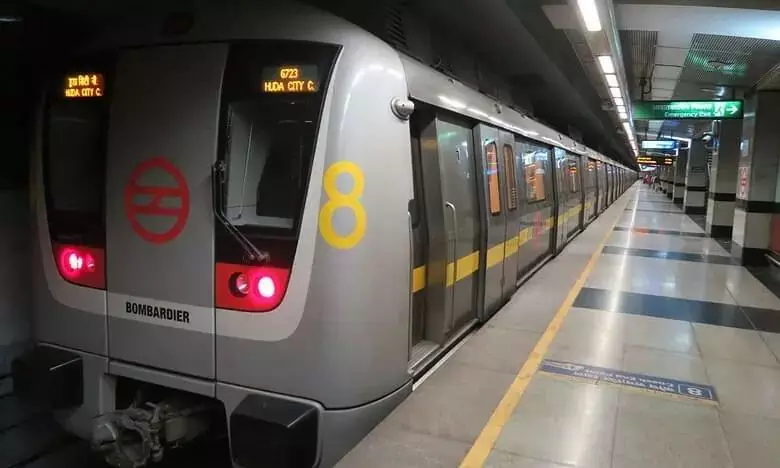

New Delhi: The Delhi Metro has closed entry and exit gates at six stations ahead of a Congress-led INDIA bloc march to the Supreme Court on Monday, called to demand the resignation of Chief Election Commissioner Gyanesh Kumar and an immediate halt to the Special Intensive Revision (SIR) of electoral rolls.
The affected stations are Janpath, Mandi House, Barakhamba Road, Central Secretariat, Rajiv Chowk and Patel Chowk. The Delhi Metro Rail Corporation (DMRC) said the restrictions were imposed for security reasons, while interchange facilities would remain available at all six stations.
“The situation will be reviewed by the security agencies, and necessary updates will be shared accordingly,” the DMRC said in a post on X.
The march comes after Chief Justice of India Surya Kant declined the Opposition alliance’s request for a meeting. The CJI is learnt to have advised the leaders to approach the Supreme Court through a petition, saying the issues they intend to raise are already before the court. The INDIA bloc had planned to submit a memorandum to him, but the march is still expected to proceed.
The Opposition has accused the Election Commission of enabling “vote chori” through the SIR exercise and has demanded the restoration of voters allegedly removed from the electoral rolls. The Congress has sought to project Monday’s protest as a citizens’ movement rather than a party-specific demonstration.
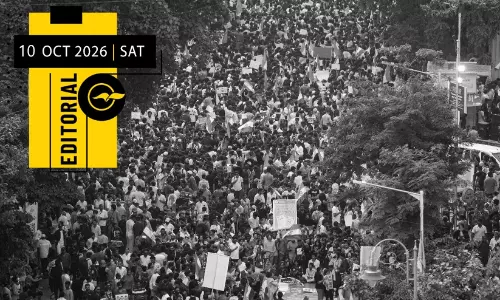
The march follows a large-scale police operation during protests called by the youth-led Cockroach Janta Party (CJP) at Jantar Mantar on October 10 and 11. The CJP, founded in May by Abhijeet Dipke, had demanded the CEC’s resignation.
Delhi Police did not grant permission for the protest and imposed prohibitory orders under Section 163 of the Bharatiya Nagarik Suraksha Sanhita. More than 40,000 police and paramilitary personnel were deployed across the city, with barricades and spike strips put in place to prevent protesters from reaching the venue.
Thousands of people were detained during the two-day crackdown. Delhi Police said around 1,500 people had been detained by mid-morning on Saturday, while media reports put the overall figure at several thousand by Sunday night.
CJP founder Abhijeet Dipke, co-convenors Saurav Das and Ashutosh Ranka, and All India Students’ Association president Neha Bora were among those detained. Trinamool Congress chief Mamata Banerjee, Aam Aadmi Party convenor Arvind Kejriwal and CPI(M) leader Pinarayi Vijayan were also held while on their way to the protest and later released.
Banerjee alleged that she was kept in a prison van for two hours without being taken to her intended destination. Vijayan described the police action as “completely unbecoming of a professional police force”.
The CJP alleged that its leaders were taken to an undisclosed location and detained for nearly 24 hours before being produced before a magistrate and released on October 11.